Most market intelligence tells you what happened. I care about what it means for your next decision: where value is shifting, which regulatory changes open doors, and where infrastructure constraints will determine outcomes.
What I Deliver
Intelligence that has shaped decisions for PE firms, energy operators, telcos, and government bodies. Scoped around your decision, not a standard research template.
Strategic Deep Dives
Due diligence, market entry, competitive landscape, go-to-market validation. The analysis you need before committing capital or entering a new market.
Sector Intelligence
Policy shifts, technology moves, and market signals across energy, telecoms, and AI. What's changing, what it means, and what to watch before it becomes consensus.
Research Partnerships
Ongoing support plugged into your strategy function. Competitor tracking, scenario work, supply chain analysis, and ad hoc questions when they come up.
The Shape of the Work
Recent engagements have included strategic briefings for operators working through the UK connectivity market, where ARPU compression, altnet consolidation, and in-home experience are reshaping the competitive landscape.
Market Structure, Product-Market Fit, and Value-Added Service Strategy
Deep-dive analysis delivered to a major UK operator covering: structural pressures on the broadband market (altnet debt overhang, ARPU stagnation, cost-of-living headwinds), customer experience economics (churn drivers, reliability vs speed, in-home Wi-Fi as competitive moat), and service bundling strategy across security, energy, entertainment, gaming, and assisted living.
The work included competitive positioning matrices, Wi-Fi 7 product-market fit frameworks, and detailed business cases for smart energy integration showing churn reduction, ARPU uplift, and referral economics.
Wi-Fi 7 & 8 Gateway & Repeater Strategy for UK Telcos: a 16-page strategy brief covering ARPU growth, churn reduction, smart home platform economics, and data monetisation across a £1B+ annual revenue opportunity.
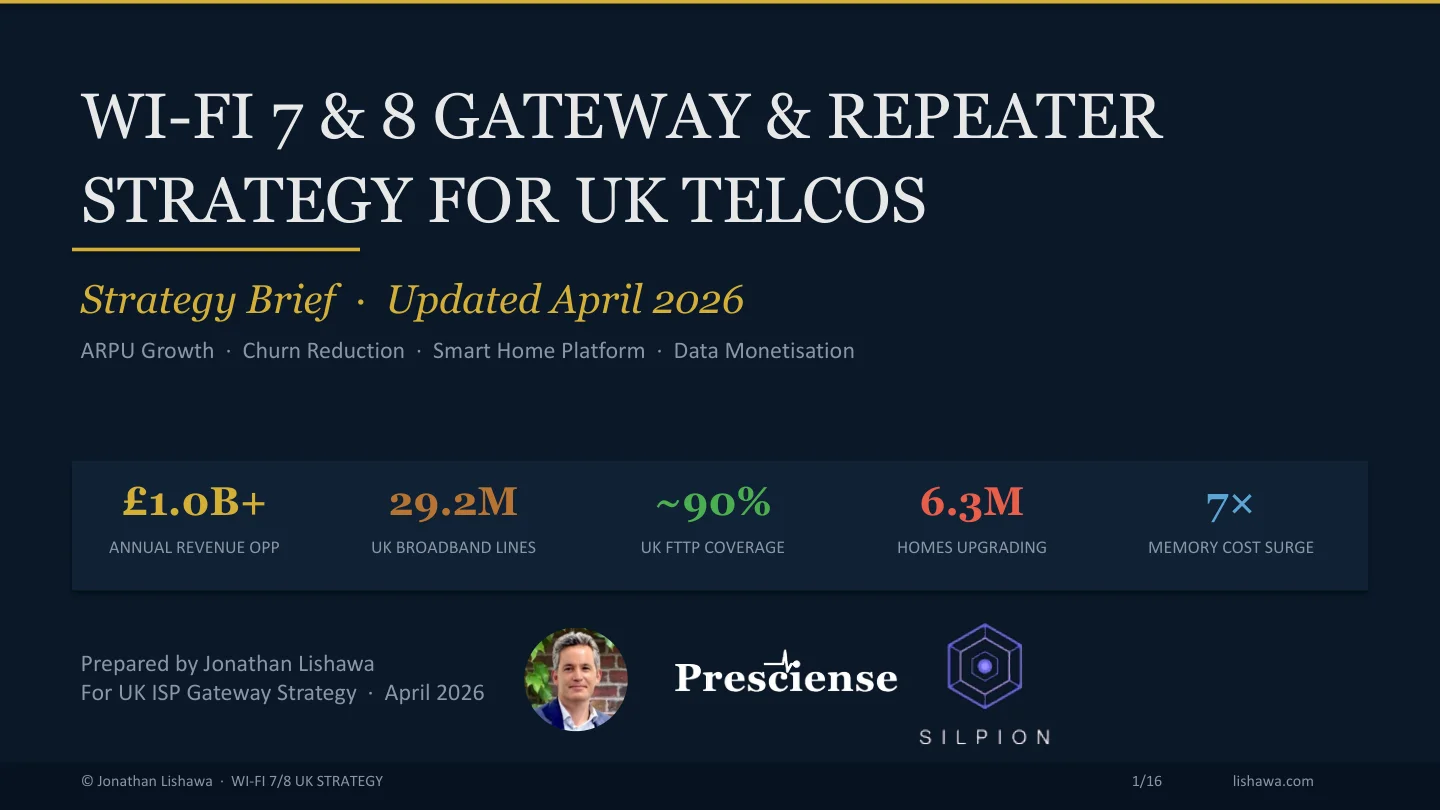
What this demonstrates:
- UK gateway market sizing and Wi-Fi generation adoption forecasting through 2029
- ARPU uplift and churn reduction modelled against real operator economics
- CPE procurement strategy factoring 7× memory cost surge and chipset roadmaps
Illustrative slide from a Tier 1 UK telco product-market-fit session.
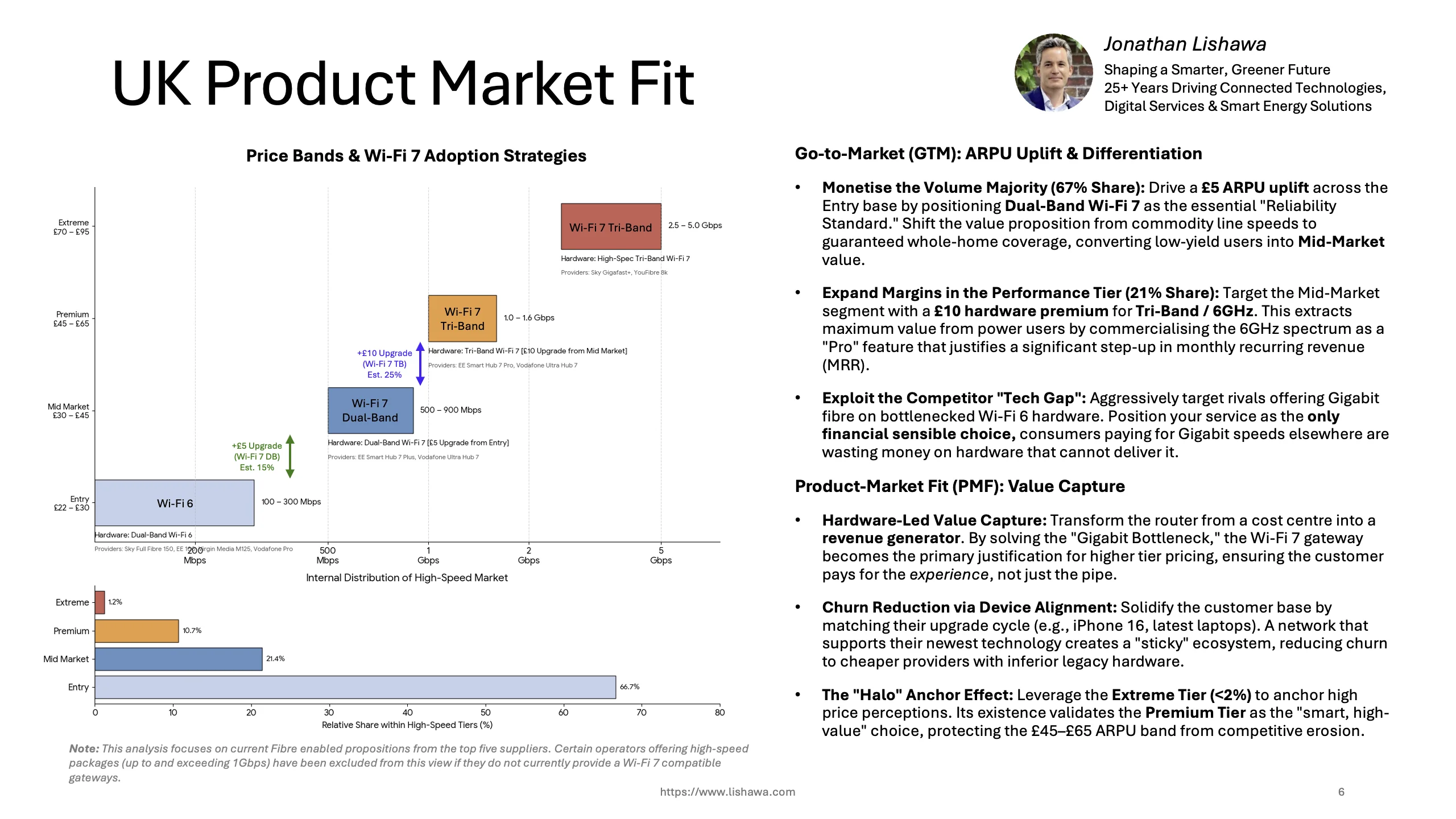
What this demonstrates:
- Commercial segmentation tied to ARPU and churn economics
- Product strategy translated into GTM actions
- Operator-grade decision support, not generic market commentary
Board-level advisory framing for Energy-as-a-Service: where telco distribution, utility economics, and customer demand create investable growth.
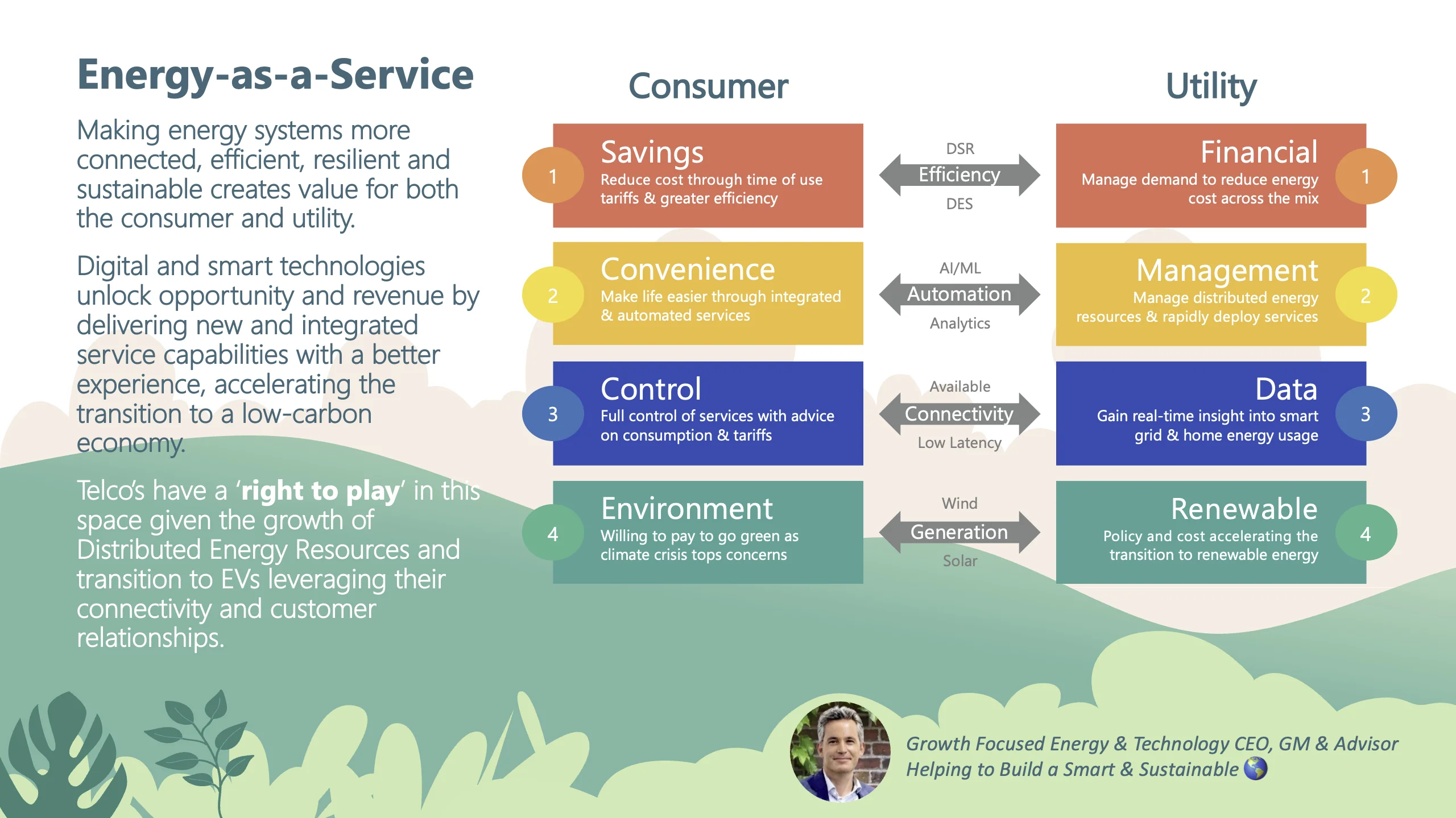
What this demonstrates:
- Where telcos can win in distributed energy and the conditions required
- How integrated propositions translate experience gains into ARPU and retention
- A delivery path from strategic thesis to commercially deployable services
Executive scenario analysis of Taiwan-China disruption, focused on the operational and capital implications for technology, energy, and global trade.
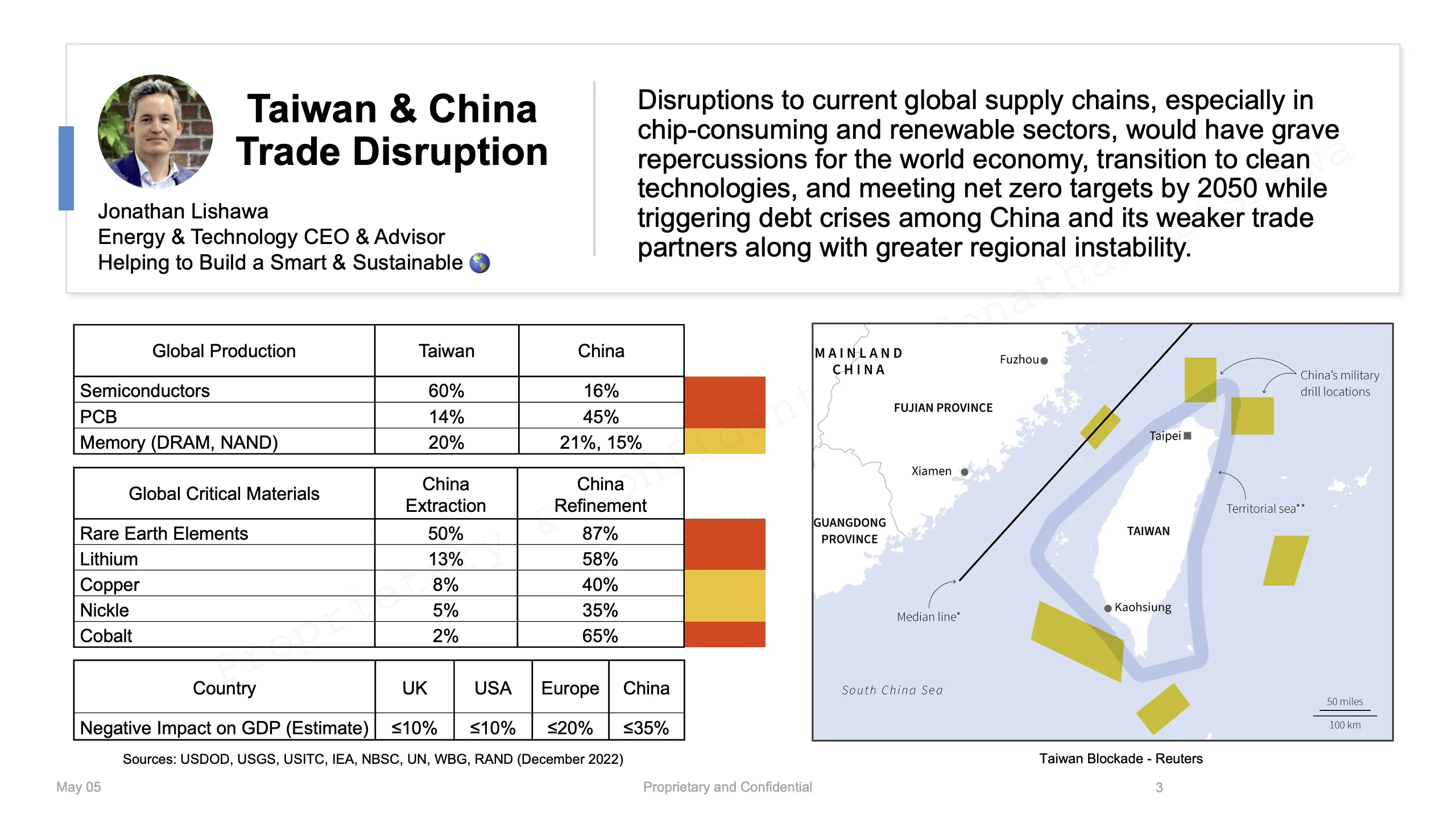
What this demonstrates:
- Geopolitical risk translated into quantified sector, cost, and GDP exposure
- Dependency mapping across semiconductors, critical minerals, and trade corridors
- Decision-ready options for resilience, mitigation sequencing, and capital allocation
Buyer action framework for LPDDR4X/5X and NAND memory: phased procurement strategy across three timing windows covering a critical Q1-Q2 2026 contracting window, near-term planning through Q3-Q4, and 2027 price normalisation, with key risk factors tracked across supply, energy inputs, and macro demand.
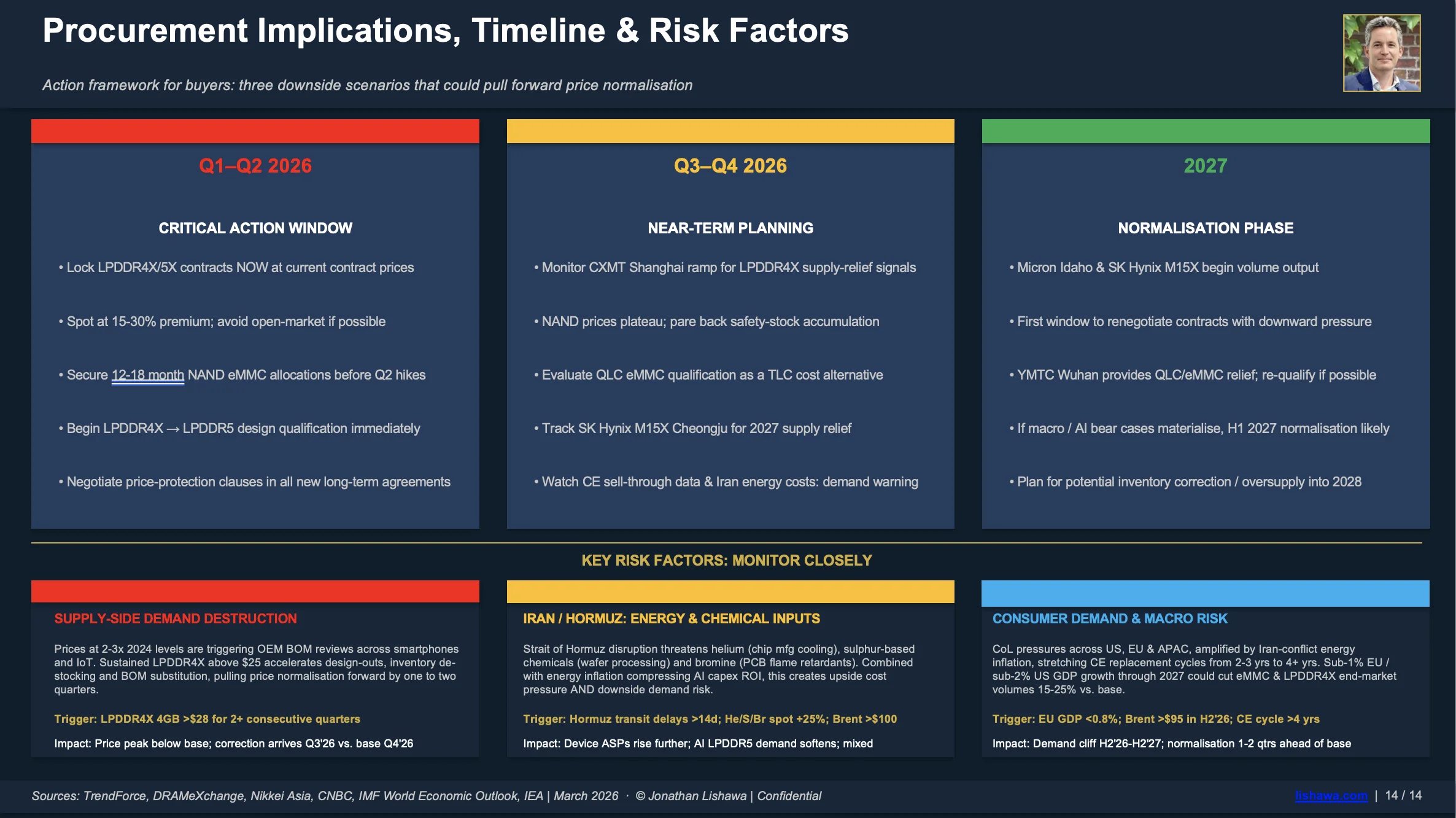
What this demonstrates:
- Contract timing and spot exposure mapped to supplier ramp schedules at Micron, SK Hynix, and YMTC
- NAND and LPDDR design qualification sequenced against pricing cycle windows to lock cost before normalisation
- Three downside risk scenarios covering supply-side destruction, Hormuz energy disruption, and consumer demand softness translated into concrete procurement triggers
The Convergence of Energy and Connectivity: a published perspective on where utility, telecoms, and digital infrastructure economics are converging.
Why it matters:
- Sets out the strategic case for convergence in plain commercial terms
- Frames practical implications for operators, investors, and policymakers
- Provides a reference point for deeper advisory discussions
How I Work
Twenty-five years running businesses means I know which questions actually matter when you're making infrastructure bets. The research reflects that.
Decision Framing
We start with the decision you need to make, not the topic you want researched. What are the options? What are the stakes? What would change your mind?
Cross-Sector Synthesis
My coverage spans energy, telecoms, and AI because that's where the decisions sit. Most valuable analysis comes from understanding how these sectors interact, not treating them in isolation.
Operator Lens
I've managed P&Ls, negotiated supply contracts, and sat in the rooms where these decisions get made. The research reflects operational reality, not theoretical frameworks.
Actionable Output
Every deliverable is structured for decision-making: clear recommendations, quantified where possible, with explicit assumptions you can stress-test.
Engagements are scoped around what you need to know and delivered in the format that's most useful for your decision process. The measure of a good engagement is whether it changes what you do, not how many pages it runs to.
Where I Focus
The sectors I know best, and where they converge.
Energy & Grid Edge
Smart metering, demand response, EV charging infrastructure, grid flexibility, and the software layer connecting utilities to consumers.
Telecoms & Connectivity
Broadband economics, altnet consolidation, Wi-Fi evolution, fixed-mobile convergence, and in-home experience as competitive differentiation.
AI & Infrastructure
Compute constraints, data centre energy demand, edge deployment, and the infrastructure bottlenecks shaping AI commercialisation.
Related pages
See how this research translates into execution in the Track Record, how it informs product thinking in Home Hub & Assisted Living, and browse papers and commentary in Insights.